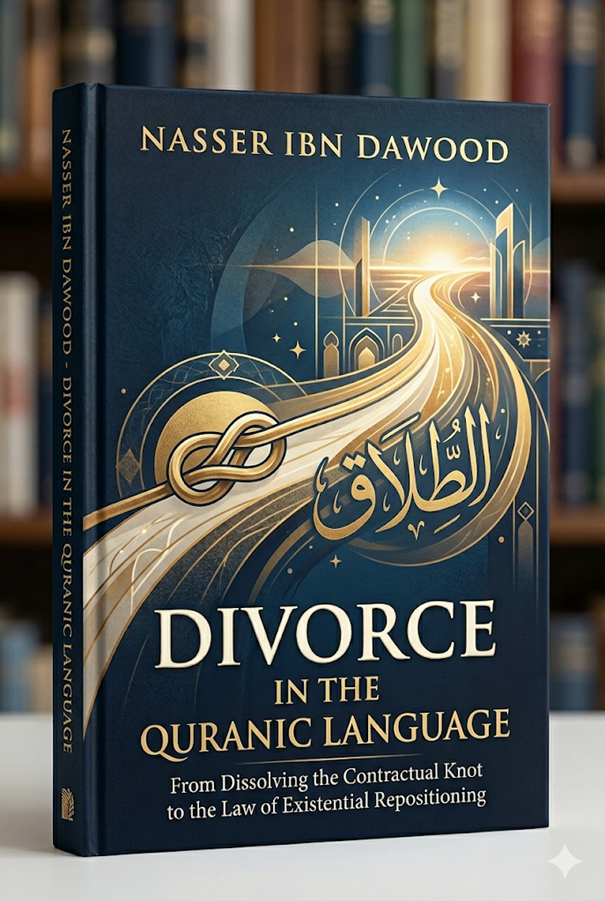
📢 Important Translation Notice
This English edition is a condensed conceptual and semantic translation.
For the complete Arabic version with detailed discussions, expanded references, and comprehensive analysis (150+ pages), please download the original Arabic book from our library.
You can use instant translation tools for real-time translation of the complete Arabic text.
📚 Download Complete Arabic Version (150+ pages)This English version provides the conceptual framework and main arguments in accessible language (21 pages).
📥 Direct Download Links
📄 DOCX 📖 PDF (Direct) 📖 PDF (Backup) 🌐 HTML 📝 Plain Text (Direct) 📝 Plain Text (Backup)📖 Translation Information
This English edition is a condensed conceptual adaptation. It presents the core ideas and philosophical framework in accessible language, but does not include all the detailed discussions, linguistic analyses, and expanded references found in the original Arabic work (over 150 pages).
For researchers and serious readers: We recommend downloading the complete Arabic version and using translation tools for a comprehensive understanding.
Introduction: Why This Book?
In contemporary religious consciousness, the concept of divorce (ṭalāq) has been severely reduced to two narrow levels:
- A procedural legal act – simply "ending the marriage."
- An emotional, moral stigma – "failure, breakdown, shame."
Both understandings miss the profound Quranic structure of the concept. The juristic tradition – though necessary for regulation – treated divorce as a chapter of rulings without analyzing its linguistic architecture within the Quran. Meanwhile, modern moralistic discourse loaded divorce with such intense psychological weight that it became "absolute evil," rather than part of a divine balance for managing relationships and transitions.
The Core Thesis:
Divorce in the Quranic tongue is not a mere procedure to end a relationship. It is a legislative‑existential structure that organizes the transition from a dysfunctional bond to a new position, within a balance that preserves rights and prevents harm.
Book Summary
Chapter 1: The Linguistic Root and Internal Structure
The root (ṭ-l-q) carries the core meaning of "unfastening," "releasing," or "setting free" – not destruction. This linguistic foundation reframes divorce as an organized deconstruction rather than an act of demolition. The book analyzes the semantic field and traces the root's usage throughout the Quran.
Chapter 2: Divorce in the Quranic Structure
From isolated words to an integrated legislative system. The Quran presents divorce not as chaos but as an engineered transition protocol, with specific timing (the iddah), measured repetitions, and clear ethical boundaries (justice, maʻrūf, iḥsān).
Chapter 3: The Network of Related Concepts
Examining al-Mithāq al-Ghalīẓ (the solemn covenant), sakīnah (tranquility), and the psychological journey from companionship to potential separation. The book demonstrates how marriage and divorce function within a unified existential system.
Chapter 4: Operational Engineering of the Separation System
The iddah as a "review laboratory," not passive waiting; legal witnessing and documentation as guarantees of systemic sovereignty; the functional distinction between ṭalāq, tasrīḥ, and firāq.
Chapter 5: Divorce as a Law of Existential Repositioning
Extending the divorce protocol beyond marriage to any dysfunctional bond – business partnerships, organizations, and social contracts. The Quranic model offers a general civilizational principle: how to end commitments with dignity and balance.
Chapters 6–8: Critique and Reconstruction
A radical critique of the "tahlīl" (analyzer) protocol (marrying a divorced woman to then divorce her so she can remarry her first husband) as a corruption of the Quranic intent. Rebuilding the model: from "three divorces" to "informed transition." Transforming divorce from social stigma to reform consciousness.
Conclusion: From Divorce as an Event… to Divorce as a System
This book does not offer merely another interpretation of divorce. It offers a reconstruction of how we understand the concept itself. Through the method of Fiqh al‑Lisan (Jurisprudence of the Quranic Tongue), divorce emerges as a structural unfastening, a temporary review phase, and a general law of repositioning. The three governing values – justice, maʻrūf, and iḥsān – transform divorce from a potential catastrophe into an ethical test of how human beings end things without losing their humanity.
The final message of the Quran on divorce is this: You are not measured by your ability to remain at all costs, but by your ability to build consciously… and to part with dignity.
Table of Contents (Abridged)
Full table of contents (15+ appendices) available in the complete Arabic version.
Key Features
- Founding the method of "Fiqh al-Lisan" (Jurisprudence of the Quranic Tongue)
- Structural analysis of the root (ṭ-l-q) and its semantic field
- Reconnecting divorce to the Divine Balance (al-Mīzān)
- The Iddah as a "review laboratory" – not passive waiting
- Radical critique of the "tahlīl" (analyzer) marriage protocol
- Existential repositioning as a general civilizational law
- Over 15 foundational appendices (conceptual glossary, symbolic hermeneutics, social engineering, heritage critique)
About the Author
Nasser Ibn Dawood is an Islamic researcher and engineer specializing in digital Quranic studies. His work focuses on bridging traditional Islamic scholarship with contemporary linguistic and philosophical analysis, making classical Islamic concepts accessible and relevant to modern readers across cultural boundaries.
All his works are available under Creative Commons licenses at: https://nasserhabitat.github.io/nasser-books/